Author:Arooba
Released:November 17, 2025
Your kitchen or bathroom sink cabinet is a mess right now. Cleaning supplies shoved to the back, random bottles tipping over, and that annoying pipe taking up all the good space. Most people keep cramming stuff in there until the door barely closes. That wasted space under your sink could work for you instead of against you.
What Makes a Good Under-Sink Setup
Not all organizers work under sinks. You need something that deals with those pipes. Look for an under-sink organizer that fits around the plumbing.
Pipe-Friendly Design
Pipe-friendly caddies go around your plumbing instead of blocking it. They've got cutouts or open backs that let the pipes sit where they need to. You're not shoving boxes to one side anymore.
Two-Level Storage That Matches Real Use
These caddies usually have two levels. The bottom holds bigger bottles like bleach or all-purpose cleaner. The top part is suitable for sponges, scrub brushes, and smaller items you grab often.
Expandable Trays and Sliding Access
Expandable sink trays adjust to fit your cabinet width. Most cabinets aren't the same size. With expandable options, you pull the tray wider or push it narrower until it fits.
The sliding part matters. When your expandable sink trays slide out, you don't crawl into the cabinet to grab something from the back. Pull the tray forward, get what you need, push it back.
Materials That Hold Up Under the Sink
Plastic and coated metal organizers tend to hold up better in damp environments, while untreated metal can rust over time. Lightweight systems also make it easier to pull trays out entirely without stressing cabinet floors or plumbing connections.
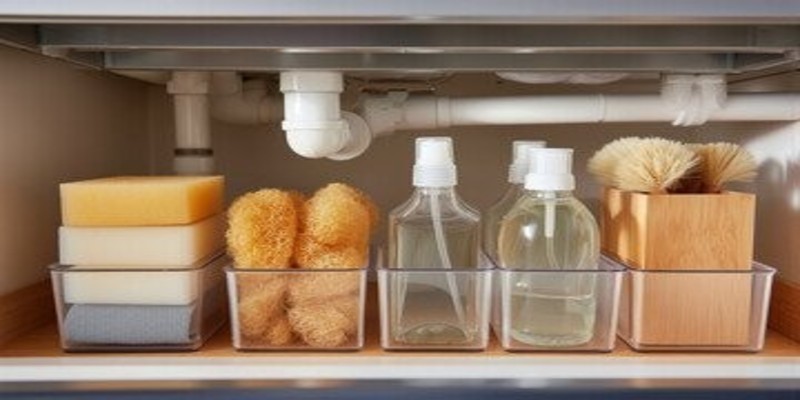
Setting Up Your Under-Sink Space
1. Clear Everything Out First
Pull everything out. You'll find stuff you forgot existed. Toss anything empty, dried up, or expired. Be real about what you use versus what's been sitting there for years.
2. Clean and Check for Moisture
Clean the cabinet floor while it's empty. Wipe down sticky spots or spills. Check for leaks around your pipes. Better to catch problems early.
Under-sink cabinets are high-risk areas for moisture, even when there is no apparent leak. A simple waterproof liner or removable drip tray under your organizers helps protect the cabinet base and makes future cleanups easier when bottles spill or condensation forms.
3. Measure Before You Buy
Measure your space. Get the width, depth, and height. Don't forget to measure around those pipes. You gotta know how much room you're working with.
4. Match Organizers to What You Store
Pick your organizers based on what you're storing:
Heavy bottles need sturdy shelves or pipe-friendly caddies that won't collapse
Sponges and dish towels can go in baskets
Spray bottles work hanging on door hooks
Paper towel rolls need open bins
Put the items you use most in the easiest spots. Daily stuff goes in front. Weekly items in the middle. Things you rarely touch go in the back.
5. Kitchen vs Bathroom Storage Needs
Kitchen and bathroom under-sink storage benefit from slightly different setups. Kitchens usually work best with pull-out trays and door-mounted hooks for cleaning sprays and trash bags. Bathroom cabinets often need smaller bins for backups like skincare, toothpaste, and paper goods, with electrical items kept raised and dry.
Extra Tricks for Maximum Space
Spa utility storage ideas work under sinks. Hotels keep their supplies organized, with everything in its own spot. You can do the same.
Use small bins to separate different categories. One for dish soap and detergent, another for scrub brushes and sponges, a third for trash bags. When everything has its own container, items don't get mixed up.
Door space is free:
Stick adhesive hooks on the cabinet door for spray bottles, gloves, or towels
Command strips hold lightweight shelves for sponge holders or soap dispensers
Over-the-door organizers add pockets for more minor stuff
Stack up when you can. Two levels give you double the storage. Just make sure the bottom shelf can handle the weight if you're stacking heavy cleaners.
Label your containers if you can't see what's inside. Saves you from having to open every container to find what you need.
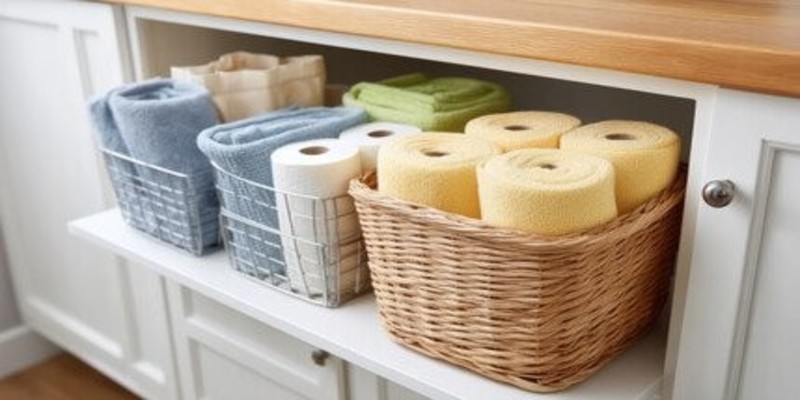
Keeping It Organized Long-Term
Getting organized is easy. Staying organized takes work. Put things back where they go after you use them. Takes two seconds, but it prevents small messes from turning into full cabinet resets later. When every item has a clear home, putting it away feels automatic instead of optional.
A quick monthly check keeps problems small. Pull out products you no longer use, wipe down shelves, and look for moisture or slow leaks around pipes and valves. Catching minor drips early avoids warped cabinets and mold buildup that is harder to fix later. This routine takes only a few minutes and saves time in the long run.
Clutter-free cabinets stay that way when storage limits are respected. Under-sink organizers work best when they are not packed edge-to-edge. Overfilling makes items hard to grab and easy to knock over. If the organizer is consistently full, it is a sign to reduce backups, move overflow to another container, or rethink what actually needs to live under the sink.
Making the Most of What You've Got
You don't need fancy systems. Basic expandable sink trays and pipe-friendly caddies do the work. Create a system that makes sense for how you use your space.
Think about your routine. What do you grab under that sink every day? That stuff should be easy to reach. Everything else fits around it. Your spa utility storage should match your habits, not some perfect picture.
Under-sink organization is less about perfection and more about removing friction from daily routines. When bottles stop tipping, supplies stop disappearing, and moisture no longer causes damage, the cabinet quietly does its job.



-
Home Improvements
What Your Kitchen Handles Say About Your Style - and How to Get It Right
January 21, 2026
-
Home Improvements
How To Fix Cracked Concrete Floors In Your Garage: Step-By-Step Instructions
December 30, 2025
-
Home Improvements
Corner Shelves: Functional Storage For Calm Interiors
November 22, 2025
-
Home Improvements
Roll-Out Drawers For Accessible And Aesthetic Essentials
November 19, 2025
-
Home Improvements
Luxury Towel Sets And Folding Techniques For Hotel-Style Display
November 11, 2025
-
Home Improvements
From Chaos To Calm: Master Bathroom Organization With Tiered Trays
November 9, 2025